The Sarah Maguire Prize for Poetry in Translation is an international biennial award for the best book of poetry in English translation by a living poet from beyond Europe. The winning poet and their translator, or translators, will split an award of £3000 between them.

“Writing too many poems is a betrayal of both words and trees”

– Birhan Keskin, SMP 2026 shortlisted poet

The Sarah Maguire Prize For Poetry in Translation shortlist will not waste trees, words or the readers’ time. These seven vital books of translated poetry illuminate the urgent issues of our times, foregrounding voices of exile, pressing ecological concerns, and the processing of colonial violence.

Across the world, rising nationalism, closing borders, and environmental disaster are causing the world to shrink and fragment. The Sarah Maguire Prize pushes back, as an international biennial award for the best book of poetry in English translation by a living poet from beyond Europe, it celebrates connection and understanding. This year, the judges are honoring poets and translators from a broad range of languages and countries, namely Indonesia, Türkiye, Syria, China, South Korea, Mexico, and Chile.

The Sarah Maguire Prize for Poetry in Translation 2026 shortlist is:

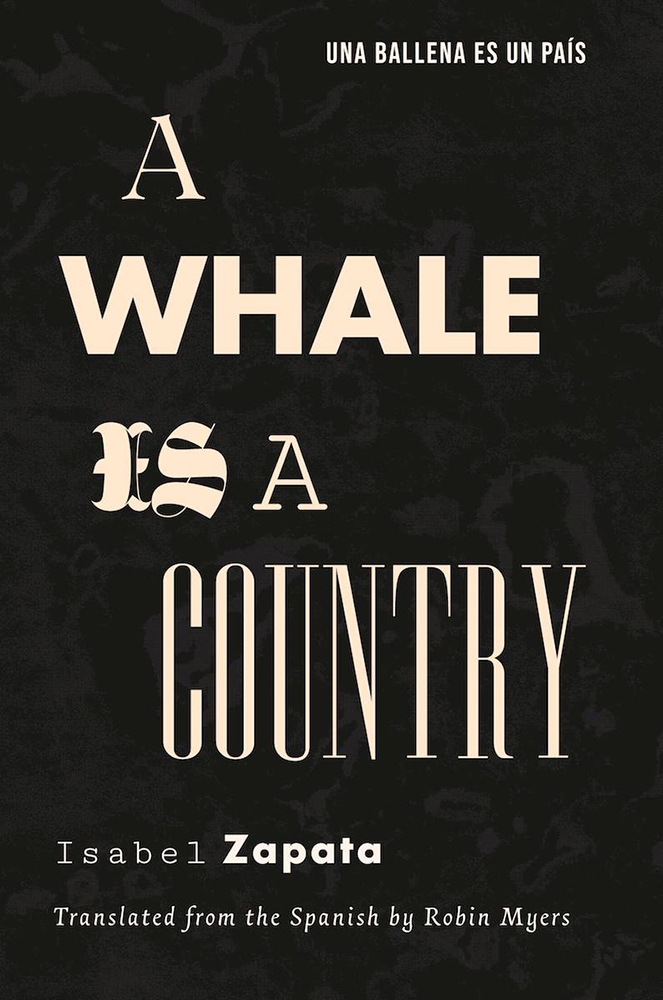
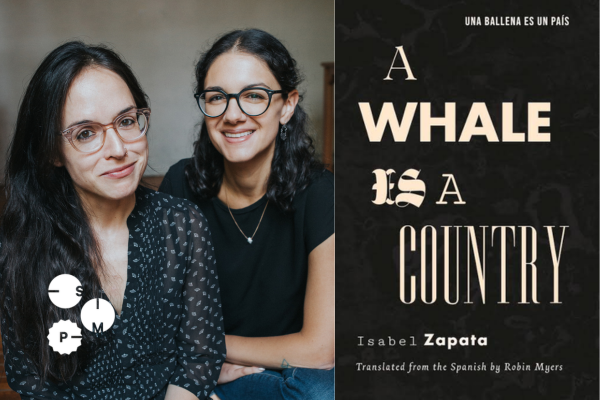
  • A Whale Is a Country by Isabel Zapata, tr. Robin Myers
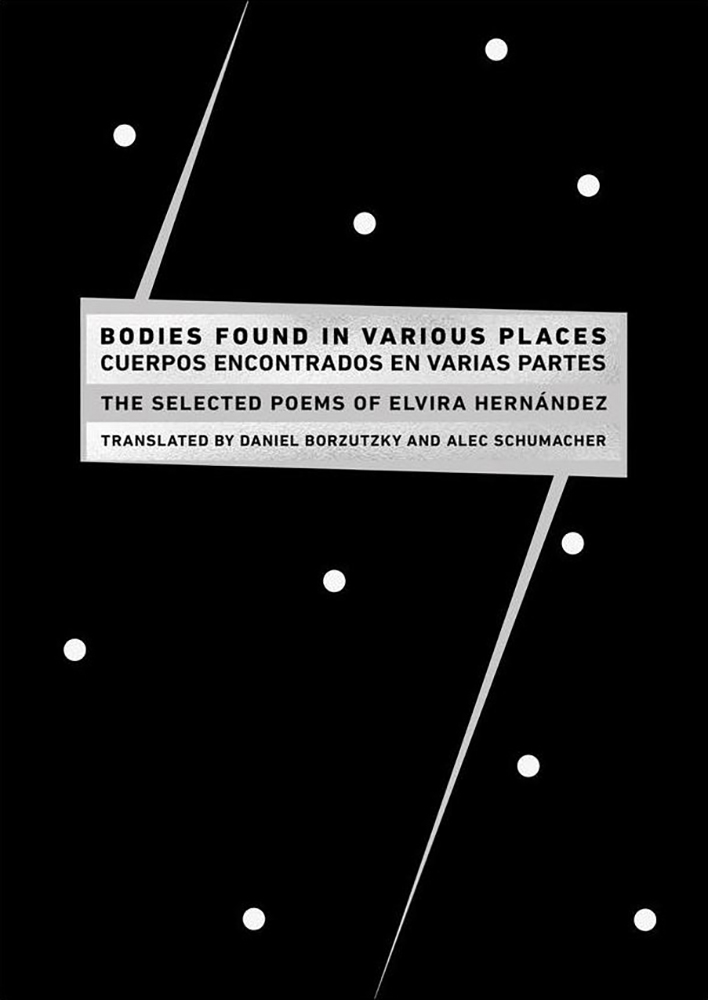
  • Bodies Found in Various Places by Elvira Hernández, tr. Daniel Borzutzky and Alec Schumacher
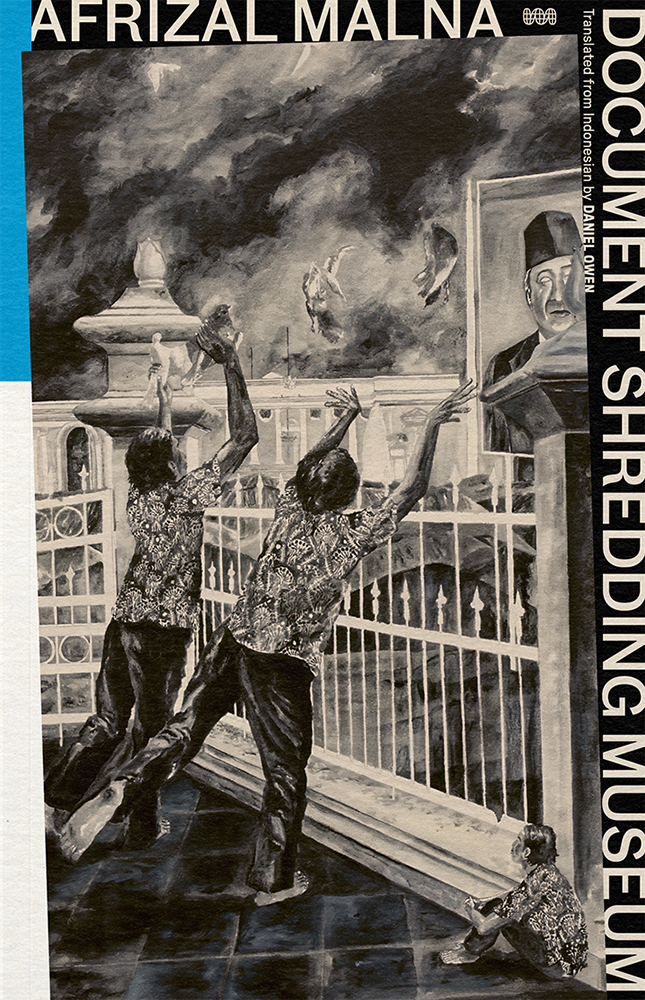
  • Document Shredding Museum by Afrizal Malna, tr. Daniel Owen
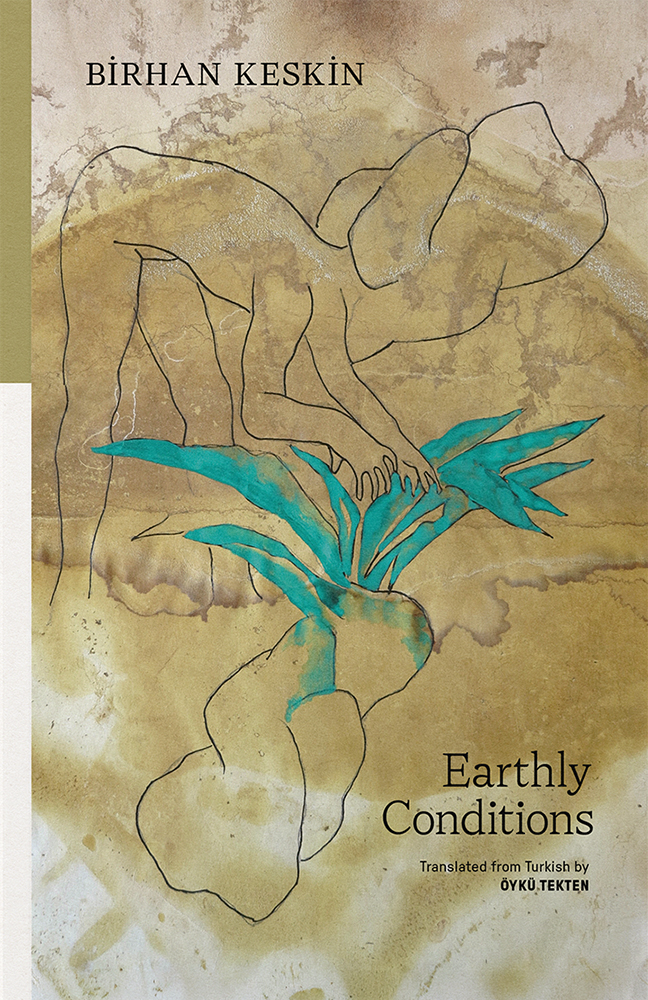
  • Earthly Conditions: Selected Poems by Birhan Keskin, tr. Öykü Tekten
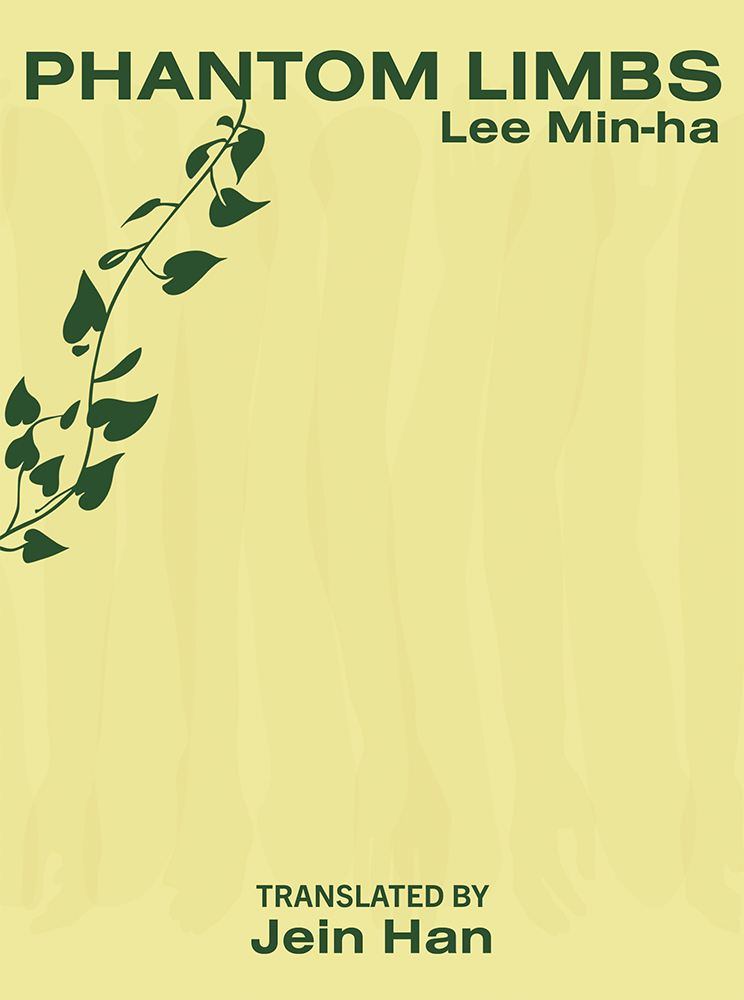
  • Phantom Limbs by Lee Min-ha, tr. Jein Han
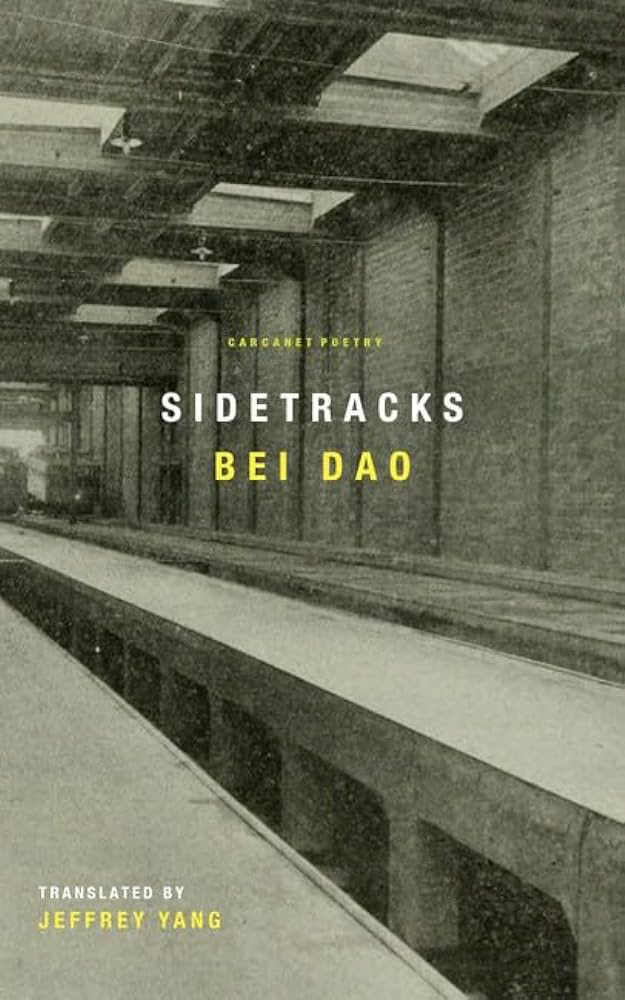
  • Sidetracks by Bei Dao, tr. Jeffery Yang
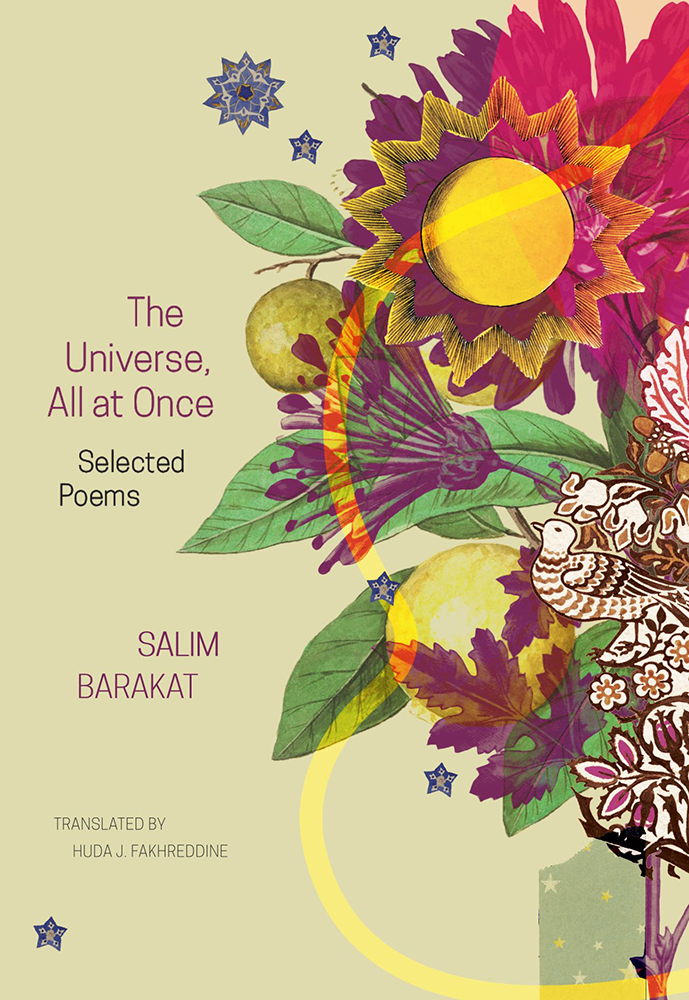
  • The Universe All at Once by Salim Barakat, tr. Huda Fakhreddine

The judges this year are André Naffis-Sahely and Leo Boix, chaired by Mona Kareem. André is a poet, translator, and editor whose recent work includes The Promised Land: Poems from Itinerant Life (Penguin Books, 2017) and High Desert (Bloodaxe Books, 2022). Leo is a poet and translator, author of the acclaimed Southernmost Sonnets (Chatto, London, 2025). Mona is a poet and scholar who has authored four collections, including I Will Not Fold These Maps (Poetry Translation Center, London 2023).

A quote from Leo Boix:

“I am genuinely thrilled by this year’s shortlist. It brings together an extraordinary range of poetic voices, forms and traditions—from striking debut collections and single-poet volumes to selected poems and works spanning decades of remarkable writing. Collectively, these books remind us of the astonishing breadth, vitality and imaginative power of poetry in translation today.

The shortlist takes us across continents and cultures, introducing readers to writers from Chile, China, Indonesia, South Korea, Mexico, Syria and Turkey, brought into English through translations from Arabic, Chinese, Indonesian, Korean, Spanish and Turkish. Each book offers a distinct way of seeing the world, yet together they celebrate the transformative possibilities of language, translation and poetic exchange.

It was a tremendous privilege to judge this year’s prize alongside Mona Kareem and André Naffis-Sahely, two poets, translators and readers whose intelligence, generosity and passion made every conversation a joy. Our discussions were rigorous, thoughtful and endlessly inspiring, and I couldn’t have wished for better fellow judges.

This is a wonderfully rich, adventurous and deeply rewarding shortlist, and I hope readers will discover in these books the same excitement, beauty and sense of possibility that we found during the judging process.”

The Sarah Maguire Prize seeks to honour poets and translators alike, recognising the essential and creative act of translation, so the winning poet and their translator, or translators, will share an award of £3000. The winner will be announced at an online ceremony on Sunday, 13th September.

The Sarah Maguire Prize for Poetry in Translation 2026 shortlist

Fonograf Editions

A Whale Is a Country by Isabel Zapata, Translated by Robin Myers

Poet Country of Origin: Mexico
Translator currently based in: Mexico City, Mexico
Language: Spanish

Zapata’s poems often delight, then unsettle; again and again, she peels back the layers of what human beings take for granted about our experiences, surroundings, and relationships with both. In the end, they urge us into a state of witness bound up with humility, outrage, devotion, and care.

The animals that populate the poems of Isabel Zapata’s A Whale Is a Country invent us: they lead us into the forest of our own humanity. Their songs, growls, and silences speak in a language we took for lost, but now we hear it anew: in tender, crystalline, quadrupedal poems that invite us to recover our connection to the kindred lives with which we share this world.

An extinct marsupial is a ghost. A tortoise is an ancient spirit wandering an island at the end of the world. A stuffed polar bear is the modest proof of a terrible defeat. From the microscopic waters where the hardy tardigrades make their home, to the ardent imagination that forged the impossible jackalope, to the nature preserve in Woodside, California, where Koko the gorilla learned sign language, every ecosystem appears before us as a site of discovery and communion.

Isabel Zapata was born in Mexico City in 1984. She is the author of Las noches son así, Alberca vacía/Empty Pool (bilingual edition translated by Robin Myers), Una ballena es un país, In vitro (In Vitro: On Longing and Transformation, translated by Robin Myers and published by Coffee House Press in 2023), Troika, and Montaigne, etc. In 2015, along with four friends, she founded Ediciones Antílope. She currently belongs to the Sistema Nacional de Creadores de Arte (SNCA).

Robin Myers is a poet and translator. She won the 2025 National Book Award in Translated Literature for We Are Green and Trembling, by Gabriela Cabezón Cámara (New Directions), also longlisted for the 2026 International Booker Prize, and was shortlisted for the 2025 National Translation Award in Poetry with The Brush, by Eliana Hernández-Pachón (Archipelago Books). Other recent poetry translations include What Comes Back by Javier Peñalosa M. (Copper Canyon Press), Copy by Dolores Dorantes (Wave Books), and many others.

Publisher's Website

Cardboard House Press

Bodies Found in Various Places by Elvira Hernández, Translated by Daniel Borzutzky and Alec Schumacher

Poet Country of Origin: Chile
Translators Currently based in: USA
Language: Spanish

The first anthology of Elvira Hernández’s poetry translated into English brings the award-winning contemporary Chilean poet’s work of love, survival, persistence, disturbance, amazement, and delight to a new audience.

Elvira Hernández has occupied a marginal position in the Chilean poetic scene for decades, her quiet but mordant voice looking inward and outward, ironizing the circumstances of life that have brought us to this critical point in society. As recently as 2018, her work has become more visible after receiving the Jorge Teillier National Poetry Award (2018), the Pablo Neruda Ibero-American Poetry Award (2018), and the National Literature Prize (Chile 2024). With this belated recognition of her work has come an interest in studying her unique poetic language, with new critical books forthcoming from Spanish and Latin American publishers. Bodies Found in Various Places collects poems written from 1981-2016, providing readers with a curation of texts that show why Hernández is one of the most vital Latin American poets writing today.

Elvira Hernández, pseudonym of María Teresa Adriasola, is a Chilean poet, essayist, and literary critic. She is one of the most important voices of contemporary poetry in the Southern Cone and the Chilean neo-avant-garde. Some of her most important works include: ¡Arre! Halley ¡Arre! (Giddy up, Halley!) (1986), La bandera de Chile (The Chilean Flag) (1991), Santiago Waria (1992), and Pájaros desde mi ventana (Birds from My Window) (2018). She is the recipient of the Jorge Teillier National Poetry Award (2018), the Pablo Neruda Ibero-American Poetry Award (2018), and the National Literature Award (Chile 2024).

Daniel Borzutzky is a poet and Spanish-language translator from Chicago. His most recent books are The Murmuring Grief of the Americas (2024) and Written After a Massacre in the Year 2018 (2021). His 2016 collection, The Performance of Becoming Human, received the National Book Award. Lake Michigan (2018) was a finalist for the Griffin International Poetry Prize. His most recent translations are Cecilia Vicuña’s The Deer Book (2024); and Paula Ilabaca Núñez’s The Loose Pearl (2022), winner of the PEN Award for Poetry in Translation. His translation of Galo Ghigliotto’s Valdivia received the American Literary Translators Association’s 2017

National Translation Award, and he has also translated collections by Raúl Zurita and Jaime Luis Huenún.

Alec Schumacher is Associate Professor at Gonzaga University. His research interests are Latin American poetry, translation, and avant-garde poetics. His publications have been focused on Chilean poets Juan Luis Martínez and Elvira Hernández. His translations include works by Jorge Arbeleche, Elvira Hernández, and Luis Correa-Díaz. In 2019, he published The Chilean Flag, a translation of Elvira Hernández’s book, which was nominated for the National Translation Award in Poetry 2020 by The American Literary Translators Association.

Publisher's Website

World Poetry Books

Document Shredding Museum by Afrizal Malna, Translated by Daniel Owen

Poet Country of Origin: Indonesia
Translator Currently based in: USA
Language: Indonesian

Indonesian poet Afrizal Malna’s Document Shredding Museum moves from intimate encounters between lovers and friends to mass environmental and semantic destruction, engaging with Javanese literary tradition and the archives of colonial and postcolonial violence.

Drawing on a wide array of modes and moods, and colored always by Malna’s characteristic complex of dark humor, curiosity, and insight into the iniquitous social conditions of the global present, Document Shredding Museum proposes a poetics of uncertainty and wonder as it aims to make porous the ossified social imagination encoded in dominant regimes of language usage. Since the mid-1980s Malna has been respected as an innovator in the Indonesian literary tradition, and his extensive work in performance and visual art has deeply informed his poetics. First published in 2013, these poems explore Indonesian and global histories by reflecting on the mythic in the everyday and the everyday in the mythic. Document Shredding Museum is the first of Malna’s books to be published in the United States.

Afrizal Malna  (b.1957 in Jakarta, Indonesia) is a poet, artist, and writer of short stories, novels, literary essays, and play scripts. His work has won a number of national and international literary honors, including the SEA Write Award  and the Khatulistiwa Literary Award. His most recent books are the essay collection Performance Art dan Medan Pasca-Seni (Performance Art and the Post-Art Field) and the poetry collection Tiket Masuk Bioskop Autobiografi (Autobiography Cinema Ticket). He was a 2015 DAAD Artist-in-Residence (Berlin) and has performed at poetry festivals in Bali, Bremen, Maastricht, Hamburg, Kerala, and Yokohama. His work has been translated into Dutch, English, German, Japanese, and Portuguese. His books available in English translation are Document Shredding Museum, Morning Slanting to the Right, and Anxiety Myths.

Daniel Owen is a poet, translator, and editor. His translations from the Indonesian of Afrizal Malna’s Document Shredding Museum were chosen as the winner of the National Translation Award in 2025, and  Asymptote Journal’s 2019 Close Approximations contest. He is the author of the poetry books Toot Sweet (United Artists), Restaurant Samsara (Furniture Press), and Celingak-Celinguk (Tan Kinira). Recent writing and translations have appeared in Tripwire, Two Lines, Circumference Magazine, and Harp & Altar. He edits and designs books and participates in many processes of the Ugly Duckling Presse editorial collective.

Publisher's Website

World Poetry Books

Earthly Conditions: Selected Poems by Birhan Keskin, Translated by Öykü Tekten

Poet Country of Origin: Türkiye
Translator Currently based in: Granada, Spain and NY, USA.
Language: Turkish

A representative selection of acclaimed Turkish poet Birhan Keskin’s work, Earthly Conditions explores the loss and longing of the human condition in the context of its separation from the non-human world.

Keskin’s ability to shift voices between seemingly distinct subjectivities creates a rich texture and an ambiguity that sits at the heart of her poetry. This poetry is often autobiographical, but the “I” of these poems is merged with non-human voices—stones, penguins, oceans, trees, glaciers, among others—in a way that might be termed organic. Each poem in the book opens the door to introspection in an aching search for wholeness. Although Keskin has been a major voice in the Turkish literary scene since the 1980s, she does not publish often because, as she puts it, “writing too many poems is a betrayal of both words and trees.”

Birhan Keskin is a Turkish poet and editor. She graduated from Istanbul University with a degree in sociology. Her first poems began to appear in 1984. In the late 1990s, she was joint editor of the literary magazine Göçebe. She has since worked as an editor for a number of prominent publishing houses in Istanbul. She is the author of nine books of poetry, and previous English translations include her book-length cycle Y’ol (Spuyten Duyvil), and the selected volume & Silk & Love & Flame (Arc Publications). Keskin is the recipient of Turkey’s prestigious Golden Orange Award and the Metin Altıok Poetry Prize.

Öykü Tekten is a poet, translator, archivist, and editor. She is also a founding member of Pinsapo Press, an art and publishing experience with a particular focus on work in and about translation, and a contributing editor and archivist with Lost & Found: The CUNY Poetics Document Initiative. She is the co-translator of İlhan Sami Çomak’s Separated from the Sun (Smokestack Books) and the translator of Betül Dünder’s Selected Poems (Belladonna*). She is the general editor of the Kurdish Poetry Series for Pinsapo Press, as well as a co-editor of the annual Best Literary Translations anthology from Deep Vellum.

Publisher's Website

Ugly Duckling Presse

Phantom Limbs by Lee Min-ha, Translated by Jein Han

Poet Country of Origin: South Korea
Translator Currently based in: South Korea
Language: Korean

First published in Korean in 2005, Phantom Limbs is Lee Min-ha’s debut book of poetry. Critically lauded for its visceral imagery and world-building through word-play, this collection of surreal and fabulistic poems reminds readers that poems are spells and incantations.

“The world of Lee Min-ha’s Phantom Limbs is indeed a haunted one, at turns dreamlike and nightmarish as each poem weighs the risks and rewards of being (not quite) human, of having a body (of sorts). Every image veers wildly from expectation, and even the most surreal moments are convincingly rendered and viscerally felt. Lee’s poetry stuns in Jein Han’s beautiful, painstaking translation.” —Paige Aniyah Morris

Lee Min-ha is a Korean poet based in Seoul. She is the author of five poetry collections including Phantom Limbs (『환상수족』), Musically Scandalously (『음악처럼 스캔들처럼』), Imitation Woods (『모조 숲』), and All the Secrets of the World (『세상의 모든 비밀』). Her most recent book, Microclimate (『미기후』), received the Jihun Award and Sanghwa Award.

Jein Han lives in Seoul and translates between Korean and English. She is currently translating The Art of Cruelty by Maggie Nelson.

Publisher's Website

Carcanet

Sidetracks by Bei Dao, Translated by Jeffrey Yang

Poet Country of Origin: China
Translator Currently based in: USA
Language: Chinese

Bei Dao’s first new collection in fifteen years is also his first long poem and undoubtedly his magnum opus – the artistic culmination of a lifetime devoted to the renewal and reinvention of language. ‘As a poet, I am always lost,’ he once declared.

Opening Sidetracks with a prologue of heavenly questions and following on with thirty-four cantos, the poem travels forward and backward along the divergent paths of the poet’s wandering life. From his time as a Young Pioneer in Beijing, the poem roves through the years of exile living in six countries, back to the rural construction site where he worked during the Cultural Revolution, to the ‘sunshine tablecloth’ in his kitchen in Davis, California, and his emotional visit home after a thirteen-year separation (‘the mother tongue has deepened my foreignness’). The various currents of our times rush into his lifelines, reconfigured through the ‘vortex of experience’ and the poet’s encounters with friends, strangers and with other artists living and dead. He moves from place to place, unable to return home.

As the poet Michael Palmer noted: ‘Bei Dao’s work, in its rapid transitions, abrupt juxtapositions and frequent recurrence to open syntax evokes the unspeakability of the exile’s condition. It is a poetry of explosive convergences, of submersions and unfixed boundaries, “amid languages”.

Bei Dao, pen name of Zhao Zhenkai, was born in Beijing in 1949. Hailed as “the soul of post-Mao poetry” (Yunte Huang) and praised for his “intense lyricism” (Pankaj Mishra), Bei Dao is one of contemporary China’s most distinguished poets and the cofounder of the landmark underground literary journal Jintian (Today). He has received numerous international awards for his work, including the Cikada Prize in Sweden, the Golden Wreath Award in Macedonia, the Aragana Poetry Prize in Morocco, the Jeanette Schocken Literary Prize in Germany, the PEN/Barbara Goldsmith Freedom to Write Award, and the 2nd Yakamochi Medal in Japan; he is also an honorary member of the American Academy of Arts and Letters. Since 2007 he has been the Professor of Humanities at the Chinese University of Hong Kong, and currently resides between Hong Kong and Beijing. He acquired U.S. citizenship in 2009. New Directions publishes ten of his books, most recently his autobiography City Gate, Open Up. Bei Dao’s poetry has been translated into over thirty languages.

Jeffrey Yang is the author of the poetry books Line and Light; Hey, Marfa; Vanishing-Line; and An Aquarium. He is the translator of Bei Dao’s autobiography City Gate, Open Up; Nobel Peace Prize Laureate Liu Xiaobo’s June Fourth Elegies; Ahmatjan Osman’s Uyghurland, the Farthest Exile; Su Shi’s East Slope; and an anthology of classical Chinese poems, Rhythm 226. He is the editor at large at New Directions Publishing.

Publisher's Website

Seagull Books

The Universe All at Once by Salim Barakat, Translated by Huda Fakhreddine

Poet Country of Origin: Syria
Translator Currently based in: USA
Language: Arabic

A collection showcasing the latest poems of the Kurdish-Syrian maestro of Arabic style. Fakhreddine expertly renders his writing in English, a courageous and praiseworthy attempt to challenge the barriers of the untranslatable.

Salim Barakat, the captivating Kurdish-Syrian poet and novelist known for his mastery of Arabic style, is hailed as an enigmatic and intricate figure in contemporary Arabic literature. In The Universe, All at Once, he curates, in collaboration with translator Huda J. Fakhreddine, a selection from his later works, considering them the pinnacle of his poetic career. Drawn from pieces composed between 2021 and 2023, the poems in this collection vary from excerpts of an expansive book-length poem to concise, intense fragments.

Salim Barakat is a Kurdish-Syrian writer who is considered one of the most innovative poets and novelists writing in Arabic. He was raised in Qamishli in northern Syria, where he spent most of his youth. After living in Beirut and Cyprus, he moved to Sweden in 1999, where he still resides. A prolific writer, Barakat has published dozens of novels and poetry collections and is distinguished by his innovative use of style and theme in his writing.

Huda J. Fakhreddine is an associate professor of Arabic literature at the University of Pennsylvania. She is a translator of Arabic poetry and the author of several scholarly books.

Publisher's Website

The 2026 Judges:

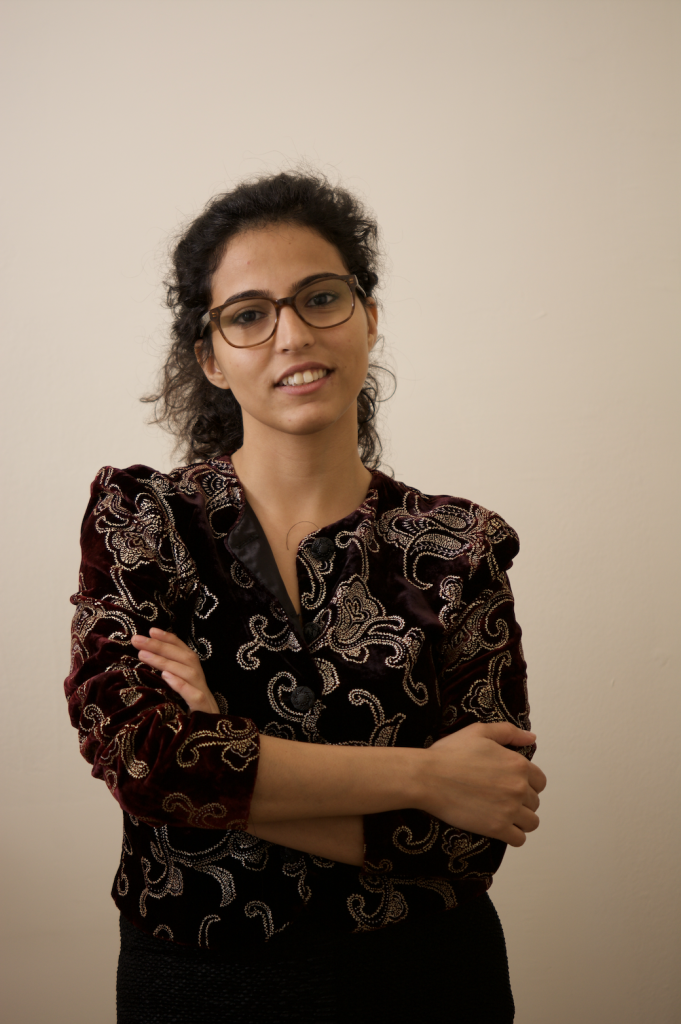
Mona Kareem

Chair of the Judges

Mona Kareem is the author of four poetry collections. Her work has been translated into nine languages, including the bilingual Arabic-English selection I Will Not Fold These Maps (Poetry Translation Centre, London 2023). Her poems have appeared in Poetry, The Yale Review, Michigan Quarterly Review, Nickle Copper, Poetry Northwest, Poetry London, and elsewhere. She is the translator of Octavia Butler’s Kindred, Ra’ad Abdul Qadir’s Except for this Unseen Thread, and Ashraf Fayadh’s Instructions Within.

Leo Boix

Leo Boix is a bilingual Latinx poet born in Argentina who lives and works in the UK. His debut English collection Ballad of a Happy Immigrant (Chatto & Windus, 2021), was awarded the Poetry Book Society Wild Card Choice. Boix second English collection, Southernmost: Sonnets is forthcoming with Chatto & Windus (Penguin Random House) in June 2025. He is the editor of Hemisferio Cuir: An Anthology of Young Queer Latin American Poetry, published by 14 Poems. Boix has been included in many anthologies, such as the Forward book of poetry, Ten: Poets of the New Generation (Bloodaxe), The Best New British and Irish Poets Anthology 2019-2020 (BlackSpring Press), Islands Are But Mountains: Contemporary Poetry from Great Britain (Platypus Press), 100 Poems to Save the Earth (Seren Books), 100 Queer Poems (Vintage/Penguin), Até Mais/Until More: An Anthology of Latinx Futurisms, (Deep Vellum), Un Nuevo Sol: British Latinx Writers (flipped eye), and Mapping the Future: The Complete Works Poets (Bloodaxe), among others. His poems have appeared in many national and international journals, including POETRY, PN Review, and The Poetry Review. Boix is a fellow of The Complete Works program, co-director of Un Nuevo Sol, an Arts Council England national scheme to nurture new voices of Latinx writers in the UK, and a board member of Magma Poetry. He received the Bart Wolffe Poetry Prize Award, the Keats-Shelley Prize, a PEN Award, and The Society of Authors’ Foundation and K. Blundell Trust, among other accolades.

André Naffis-Sahely

André Naffis-Sahely is the author of two collections of poetry, The Promised Land: Poems from Itinerant Life (Penguin UK, 2017) and High Desert (Bloodaxe Books, 2022), as well as the editor of The Heart of a Stranger: An Anthology of Exile Literature (Pushkin Press, 2020). He also co-edited Mick Imlah: Selected Prose (Peter Lang, 2015) and The Palm Beach Effect: Reflections on Michael Hofmann (CB Editions, 2013). He has translated over twenty titles of fiction, poetry and nonfiction, including works by Honoré de Balzac, Émile Zola, Abdellatif Laâbi, Ribka Sibhatu and Tahar Ben Jelloun. His writing appears regularly in the pages of the Times Literary Supplement, The Baffler and Poetry (Chicago), among others. He is an Assistant Professor of English, French and Italian at the University of California, Davis.